🎉 EARLY ACCESS SALE50% OFF all plans
FeatureShark Team••16 min read

Product Feedback System: Complete Guide to Building One in 2025

Learn how to build a robust product feedback system that scales with your business. From collection to implementation, master every step of the feedback loop.

Product FeedbackSystem DesignProduct ManagementSaaS

Product Feedback System: Complete Guide to Building One in 2025

Product Feedback System is transforming how companies interact with their customers. In this detailed guide, we'll explore proven strategies, best practices, and real-world examples that will help you master product feedback system.

If you're looking to build a comprehensive feedback strategy, understanding customer surveys is essential.

Product Feedback System: Complete Guide to Building One in 2025 Photo by Unsplash

Understanding Product Feedback System

Before diving into implementation, it's crucial to understand what product feedback system really means and why it matters for your business. product feedback system involves systematic approaches to gathering, analyzing, and acting on customer insights.

Modern businesses face increasing pressure to deliver exceptional customer experiences. product feedback system provides the foundation for understanding customer needs, identifying pain points, and making data-driven product decisions.

The evolution of product feedback system has been dramatic. What once required manual processes and significant resources can now be automated and scaled efficiently. Today's tools enable real-time collection, sophisticated analysis, and seamless integration with your existing workflow.

Understanding this aspect is crucial for success. Let's break down the key components:

Why This Matters

Companies that excel at product feedback system consistently outperform their competitors. Research shows that organizations with strong feedback systems experience:

  • 25-30% higher customer retention rates
  • 15-20% increase in customer lifetime value
  • Faster time-to-market for new features
  • Reduced development waste through validated learning
  • Improved team alignment around customer needs

The Business Impact

The ROI of effective product feedback system extends beyond customer satisfaction. It influences product development, marketing strategy, customer success initiatives, and overall business growth. Teams that implement robust feedback systems report making better decisions faster and with greater confidence.

Key Components of a Successful Strategy

Key Components of a Successful Strategy Photo by Unsplash

Building an effective product feedback system system requires several critical components working together. Let's explore each element in detail.

Understanding this aspect is crucial for success. Let's break down the key components:

1. Collection Mechanisms

The foundation of any feedback system is how you collect information. Successful strategies employ multiple channels:

In-Product Feedback: Widgets and forms embedded directly in your application capture contextual insights at the moment of experience.

Surveys and Questionnaires: Structured surveys measure satisfaction, effort, and loyalty through standardized metrics like NPS, CSAT, and CES.

Direct Conversations: Customer interviews, support interactions, and sales calls provide rich qualitative data.

Behavioral Analytics: Usage patterns, feature adoption, and engagement metrics offer implicit feedback about what's working.

2. Organization and Analysis

Raw feedback is only valuable when properly organized and analyzed. This requires:

Categorization Systems: Tag and segment feedback by feature area, user segment, priority level, and feedback type.

Sentiment Analysis: Use manual review or automated tools to understand the emotional tone and urgency of feedback.

Trend Identification: Look for patterns across time, customer segments, and feedback channels to identify systemic issues and opportunities.

Quantitative Metrics: Track volume, sentiment distribution, response rates, and implementation velocity.

3. Prioritization Framework

Not all feedback is equal. Effective prioritization balances multiple factors:

Impact Assessment: How many customers does this affect? How significant is the pain point?

Strategic Alignment: Does this support business objectives and product vision?

Effort Estimation: What resources are required? What's the complexity?

Urgency Evaluation: Are customers churning over this? Is there a competitive threat?

4. Action and Implementation

The true value of feedback comes from acting on it. Successful teams:

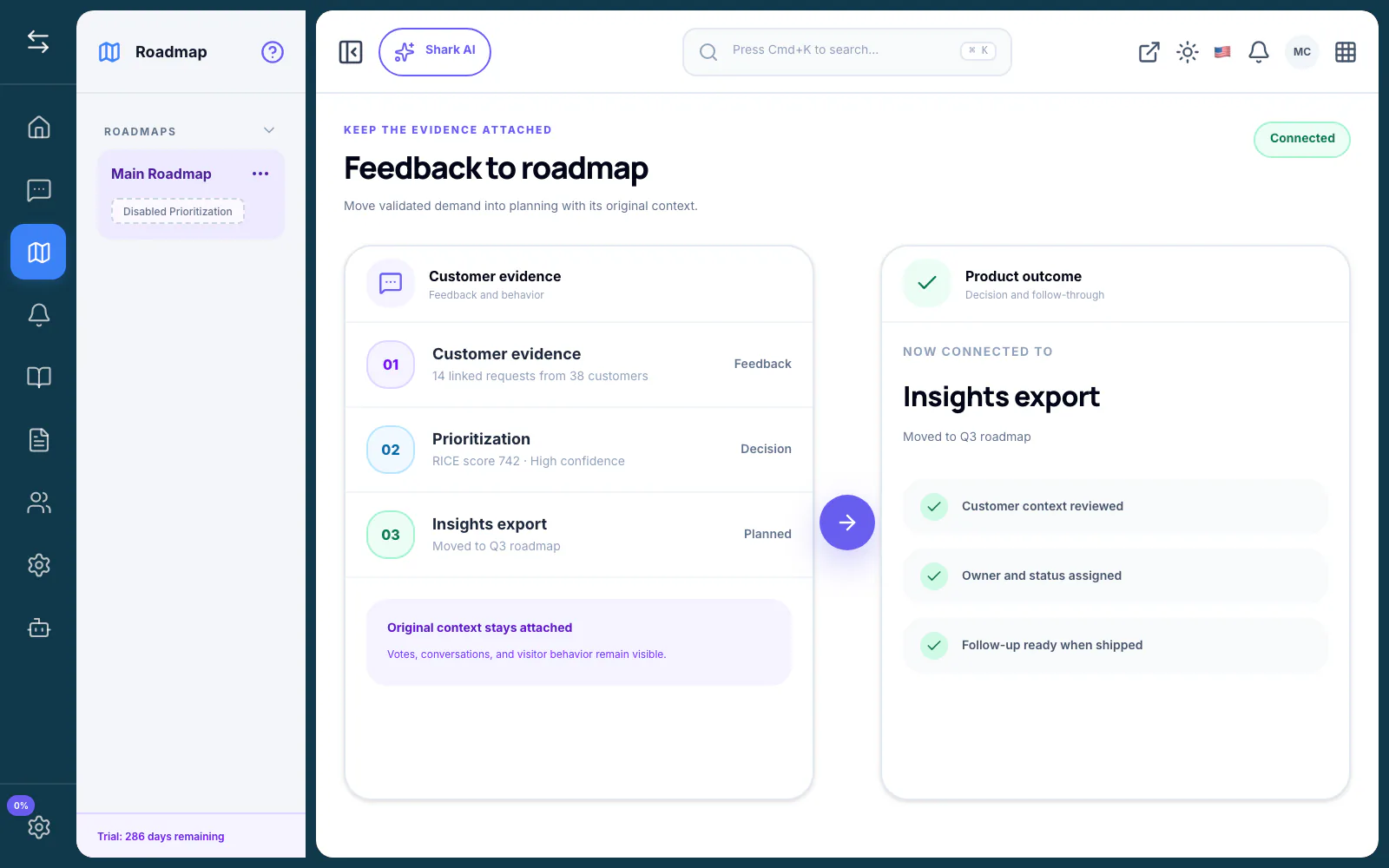
Close the Loop: Communicate back to customers about their feedback, whether implemented or not.

Track Progress: Maintain visibility into what's being built and why.

Measure Impact: After implementing changes, validate that they solved the intended problem.

Iterate Continuously: Use feedback on implemented features to refine and improve.

Advanced Techniques and Strategies

Once you've mastered the basics, these advanced techniques will take your product feedback system to the next level.

Understanding this aspect is crucial for success. Let's break down the key components:

Segmentation and Personalization

Different customer segments have different needs. Advanced feedback systems segment by:

  • Customer tier (free, paid, enterprise)
  • Usage patterns (power users, casual users, at-risk)
  • Journey stage (trial, onboarding, established, churning)
  • Industry or use case
  • Geographic region

This segmentation enables targeted feedback collection and more nuanced analysis of what different groups need.

Predictive Analytics

Modern tools can predict which feedback is most likely to impact key metrics:

  • Identify features that will drive adoption
  • Flag feedback indicating churn risk
  • Predict implementation effort more accurately
  • Forecast customer satisfaction impact

Machine learning models trained on historical data can surface the highest-impact opportunities.

Automated Workflows

Automation reduces manual work and ensures consistency:

  • Auto-categorize feedback using NLP
  • Trigger surveys based on user behavior
  • Route feedback to appropriate teams
  • Generate weekly digest reports
  • Alert stakeholders about critical issues

Automation frees your team to focus on analysis and action rather than administrative tasks.

Best Practices and Key Takeaways

Based on extensive research and real-world implementation, here are the most important best practices for product feedback system:

1. Make Feedback Easy to Give

Reduce friction at every step. The easier it is for customers to share feedback, the more (and better quality) feedback you'll receive. This means:

  • One-click feedback widgets in your product
  • Short, focused surveys (5-7 questions maximum)
  • Multiple channels (in-app, email, support tickets)
  • Mobile-optimized feedback forms

2. Act Quickly on Critical Issues

When customers report critical bugs or blocking issues, speed matters. Establish SLAs for different feedback types:

  • Critical bugs: Response within 24 hours
  • Feature requests: Acknowledgment within 48 hours
  • General feedback: Response within 1 week

3. Close the Loop Consistently

Always let customers know you heard them. Even if you can't implement their suggestion, explain why and thank them for the input. This builds trust and encourages continued engagement.

4. Measure What Matters

Track metrics that actually drive decisions:

  • Feedback volume and response rates
  • Time from collection to action
  • Implementation rate by priority level
  • Customer satisfaction with feedback process
  • Business impact of implemented features

5. Integrate with Existing Workflows

Your feedback system should fit seamlessly into how your team already works. Integrate with:

  • Project management tools (Jira, Linear, Asana)
  • Communication platforms (Slack, Teams)
  • CRM systems (Salesforce, HubSpot)
  • Analytics platforms (Mixpanel, Amplitude)

6. Balance Quantitative and Qualitative Data

Numbers tell you what's happening; words tell you why. Use surveys and metrics for the "what" and interviews and open-ended feedback for the "why."

7. Don't Just Collect—Analyze and Act

The most common failure in feedback programs is collecting tons of data but never acting on it. Schedule regular review sessions, maintain a feedback backlog, and visibly demonstrate that customer input influences decisions.

According to research from Bain & Company, companies that implement these strategies see significant improvements in customer satisfaction and retention.

Essential Tools and Technologies

Implementing effective product feedback system requires the right technology stack. Here's what to consider:

Feedback Collection Platforms

Modern feedback platforms like FeatureShark offer comprehensive solutions including:

  • In-app widgets: Contextual feedback collection without leaving your product
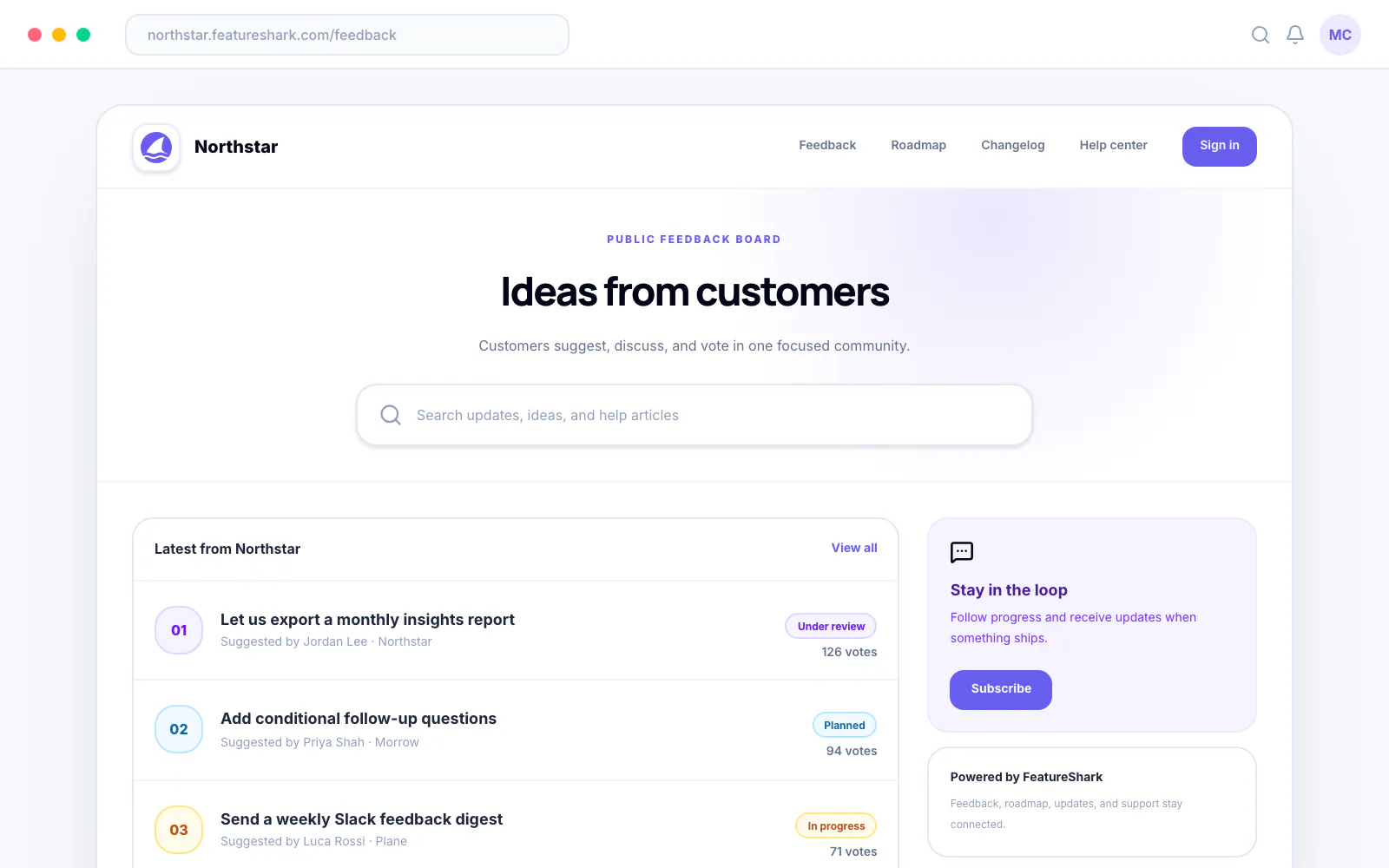
  • Public roadmaps: Transparent communication about what you're building
  • Feature voting: Democratic prioritization based on customer demand
  • Analytics dashboards: Real-time insights into feedback trends
  • Integration ecosystem: Connect with tools you already use

Survey Tools

For structured feedback collection:

  • Typeform: Beautiful, conversational surveys with high completion rates
  • SurveyMonkey: Comprehensive survey platform with advanced analytics
  • Qualtrics: Enterprise-grade research and experience management
  • Google Forms: Free, simple option for basic surveys

Analytics and Research

Complement direct feedback with behavioral data:

  • Mixpanel: Product analytics and user behavior tracking
  • Amplitude: Digital analytics and experimentation platform
  • Hotjar: Heatmaps, session recordings, and user surveys
  • FullStory: Digital experience analytics and session replay

Communication and Collaboration

Keep stakeholders aligned:

  • Slack/Teams: Real-time notifications and discussions
  • Notion: Documentation and knowledge management
  • Confluence: Team collaboration and documentation
  • Miro: Visual collaboration for feedback synthesis

The key is choosing tools that integrate well together and fit your team's workflow. Start with core feedback collection and expand as needs grow.

Step-by-Step Implementation Guide

Ready to build your product feedback system system? Follow this proven implementation roadmap:

Phase 1: Foundation (Weeks 1-2)

1. Define Objectives

  • What decisions will feedback inform?
  • Which metrics will you track?
  • Who needs access to feedback data?

2. Choose Your Tools

  • Select a primary feedback platform
  • Set up integrations with existing tools
  • Configure user permissions and workflows

3. Design Your Collection Strategy

  • Map the customer journey
  • Identify key touchpoints for feedback
  • Create initial survey templates

Phase 2: Launch (Weeks 3-4)

4. Implement Collection Mechanisms

  • Add in-app feedback widgets
  • Set up automated survey triggers
  • Create public feature request board

5. Establish Processes

  • Define review cadences (daily, weekly, monthly)
  • Assign team responsibilities
  • Create response templates

6. Train Your Team

  • Educate on feedback importance
  • Demonstrate tools and workflows
  • Share best practices

Phase 3: Optimization (Month 2+)

7. Analyze and Iterate

  • Review response rates and quality
  • Identify gaps in coverage
  • Adjust timing and placement

8. Scale What Works

  • Expand successful collection methods
  • Add advanced features (segmentation, automation)
  • Deepen integrations

9. Demonstrate Impact

  • Track implemented features from feedback
  • Measure business impact
  • Share success stories with the team

Key Milestones

  • Week 1: Tools selected and configured
  • Week 2: First feedback widget live
  • Week 4: First weekly review completed
  • Month 2: First feature shipped from feedback
  • Month 3: Full system operational with automation

Remember: Start small, prove value, then scale. Don't try to build everything at once.

Common Mistakes to Avoid

Learn from others' mistakes. Here are the most common pitfalls in product feedback system and how to avoid them:

1. Collecting Too Much, Too Often

The Mistake: Bombarding customers with surveys and feedback requests until they tune you out.

The Fix: Be strategic about timing and frequency. Limit surveys to key moments and respect customer attention. Use progressive profiling to gather information over time.

2. Ignoring Negative Feedback

The Mistake: Only celebrating positive feedback while dismissing criticism as outliers or complainers.

The Fix: Negative feedback often contains the most valuable insights. Create a culture that welcomes criticism and sees it as an opportunity to improve.

3. Asking Without Acting

The Mistake: Collecting mountains of feedback but never implementing anything, leading to customer frustration and survey fatigue.

The Fix: Only ask for feedback you're prepared to act on. Demonstrate impact by closing the loop and showing what changed based on input.

4. Lack of Prioritization

The Mistake: Treating all feedback equally, leading to analysis paralysis and diluted focus.

The Fix: Use a clear prioritization framework. Not every piece of feedback deserves immediate action. Focus on high-impact opportunities aligned with strategy.

5. Siloed Feedback

The Mistake: Feedback stays trapped in one team or tool, preventing organization-wide learning.

The Fix: Make feedback accessible across teams. Share regular insights with product, engineering, marketing, and sales. Create a single source of truth.

6. No Closed Loop

The Mistake: Customers share feedback and never hear back, wondering if anyone even read it.

The Fix: Always acknowledge feedback. Share updates when status changes. Thank customers when their suggestions are implemented.

7. Reactive Only Approach

The Mistake: Only collecting feedback when problems arise, missing opportunities for proactive improvement.

The Fix: Establish regular, systematic feedback collection. Combine reactive channels with proactive research and surveys.

8. Forgetting Context

The Mistake: Analyzing feedback without understanding the customer's situation, use case, or journey stage.

The Fix: Capture contextual metadata with every piece of feedback. Consider who's giving feedback and why before making decisions.

Real-World Success Story

How DataSync Transformed Their Product with Product Feedback System

DataSync, a fast-growing B2B SaaS company, struggled with product-market fit despite strong initial traction. Their churn rate was climbing, and the product team felt disconnected from customer needs.

The Challenge

DataSync was collecting feedback through support tickets and occasional surveys, but the insights were scattered across tools and teams. Product decisions were often based on the loudest voice or highest-paying customer rather than systematic analysis.

Key problems:

  • Feedback buried in 5+ different tools
  • No clear prioritization framework
  • 6-week average response time to feedback
  • Product team spending 40% of time on unused features

The Solution

They implemented a comprehensive product feedback system system:

Month 1: Deployed in-app feedback widgets and consolidated all feedback into a single platform.

Month 2: Launched a public roadmap and feature voting board, giving customers visibility and voice.

Month 3: Established weekly feedback review sessions and implemented a RICE prioritization framework.

Month 4: Created automated workflows to route feedback and trigger contextual surveys.

The Results

After six months:

  • 68% reduction in churn among accounts that submitted feedback
  • 3x increase in feedback volume with higher quality submissions
  • Average response time dropped to 48 hours
  • Feature adoption improved by 45% for feedback-driven features
  • Product team velocity increased 30% by focusing on high-impact work

Most importantly, the team gained confidence in their product decisions, backed by systematic customer insights rather than guesswork.

Key Takeaways

DataSync's success came from:

  1. Consolidation: Single source of truth for all feedback
  2. Transparency: Public roadmap built customer trust
  3. Process: Regular reviews and clear prioritization
  4. Speed: Fast acknowledgment and visible action

Their VP of Product noted: "We stopped guessing and started knowing what our customers needed. The impact on retention and product-market fit has been transformative."

Frequently Asked Questions

What's the best way to start with product feedback system?

Start small with one or two collection methods. Implement an in-app feedback widget and set up a simple email survey for key moments in the customer journey. Focus on consistency and responding to feedback before expanding.

How much feedback is too much to collect?

There's no magic number, but watch your response rates and customer complaints. If survey response rates drop below 10-15% or customers complain about over-surveying, you're asking too much. Quality trumps quantity.

Should we respond to every piece of feedback?

Yes—at minimum with an automated acknowledgment. For actionable feedback, provide a personalized response within 48-72 hours. Even if you can't implement a suggestion, explain why and thank the customer.

How do we prioritize conflicting feedback?

Use a framework like RICE (Reach, Impact, Confidence, Effort) or ICE (Impact, Confidence, Ease). Consider which feedback aligns with strategy, affects the most customers, and provides the greatest value relative to effort.

What if customers request features we don't want to build?

Be honest. Explain your product vision and why certain requests don't align. Customers appreciate transparency. Often, understanding the underlying need reveals alternative solutions that do fit your roadmap.

How do we measure success of our product feedback system program?

Track both process metrics (response rates, collection volume, time-to-response) and outcome metrics (feature adoption, customer satisfaction, churn reduction, time-to-market). The ultimate measure is business impact.

Should feedback collection be automated or manual?

Both. Automate routine collection (triggered surveys, widget deployment, routing) but keep analysis and decision-making human. Automation scales the process; human judgment ensures quality decisions.

How do we get buy-in from leadership?

Demonstrate impact with data. Start small, implement a few high-value features from feedback, measure results, and share success stories. Show how feedback reduces risk and accelerates product-market fit.

Conclusion: Start Building Your Product Feedback System System Today

Mastering product feedback system isn't about collecting more data—it's about building systems that turn customer insights into better products and experiences. The companies that excel at this create sustainable competitive advantages through deeper customer understanding.

The path forward is clear:

  1. Start with the basics: Implement core collection mechanisms and establish review processes
  2. Build consistency: Make feedback review and response part of your regular rhythm
  3. Demonstrate value: Track and communicate the impact of feedback-driven decisions
  4. Scale gradually: Add sophistication as your program matures

Remember that product feedback system is not a project—it's an ongoing practice. The best systems evolve continuously based on what works and what doesn't. Start today with one small improvement, and build from there.

Your customers are already forming opinions and making decisions based on their experiences. The question is whether you're listening and acting on those insights. With the right approach, tools, and commitment, you can build a product feedback system system that drives sustainable growth.

Ready to transform how you collect and act on customer feedback? FeatureShark provides everything you need to build a comprehensive feedback system—from in-app widgets to public roadmaps to advanced analytics. Start your free trial today and see the difference systematic feedback collection makes.


Have questions about implementing product feedback system in your organization? Contact our team for personalized guidance.

Related Resources

Published by

FeatureShark Team

Published on

Ready to Transform Your Feature Request Process?

Join our beta community and get lifetime perks for being an early believer.